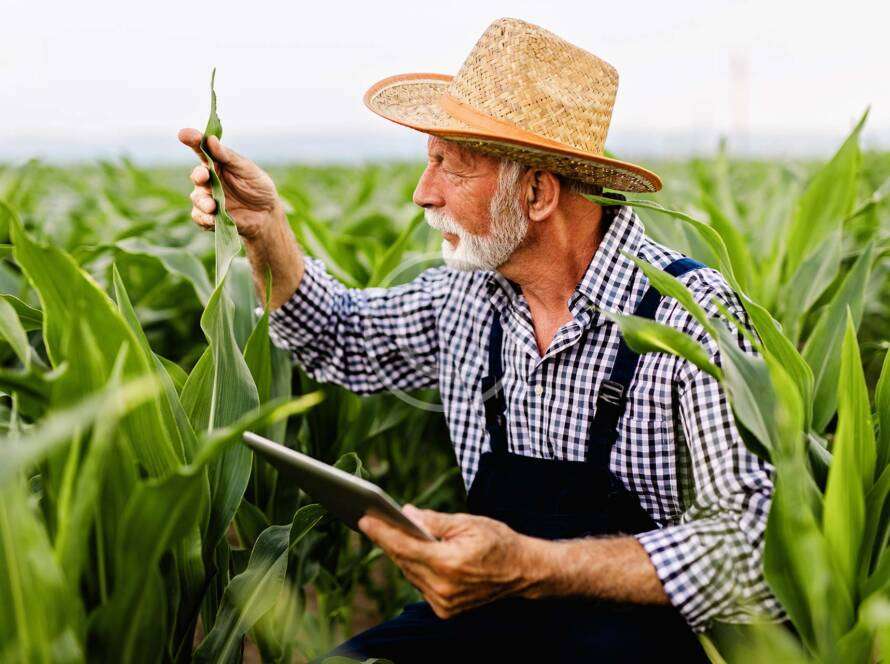
Over the past five years, digital agriculture has moved from early experimentation to real-world impact. What was once seen as emerging technology—drones, IoT sensors, robotics, and AI/ML—has become a practical toolkit for solving everyday farming challenges. The learning curve has been steep, but the results are clear: farms that adopt intelligent, data-driven systems are better positioned to improve yields, manage risk, and operate sustainably.
Here are the most important learnings that have emerged from five years of digital agriculture in practice.
1. Data Is Only Valuable When It’s Actionable
One of the earliest lessons in digital agriculture was that collecting data alone does not deliver value. Farms quickly realised that raw imagery, sensor readings, and dashboards are ineffective unless they translate into clear actions.
The most successful digital platforms:
- Convert complex data into simple, prioritised insights
- Highlight where intervention is required and why
- Support timely, confident decision-making in the field
Actionable intelligence—not data volume—is what drives measurable outcomes.
2. Field-Level Precision Beats Farm-Wide Averages
Traditional farm management often relies on averages across entire fields or properties. Digital agriculture has shown that this approach masks variability and limits performance.
High-resolution drone mapping and IoT monitoring reveal:
- Significant yield variation within the same paddock
- Localised nutrient, water, and disease issues
- Opportunities for targeted intervention
Managing at the zone level consistently outperforms blanket approaches in both productivity and cost efficiency.
3. Technology Must Fit into Existing Farm Workflows
Adoption accelerates when technology works with farmers, not against them. Complex systems that require constant manual input or specialised technical knowledge tend to be underutilised.
Key learnings include the importance of:
- Intuitive interfaces and clear visual outputs
- Seamless integration with existing machinery and practices
- Automation that reduces workload rather than adds to it
Digital tools succeed when they simplify operations and save time.
4. Drones Have Become Essential, Not Experimental
What began as a novel scouting tool has become a core component of modern farm management. Drones now play a central role in crop monitoring, yield estimation, and operational planning.
Over five years, their value has proven consistent in:
- Rapid, large-scale field assessment
- Early detection of stress, pests, and disease
- Supporting precision harvesting and input application
Combined with AI/ML, drones deliver insights that are faster, safer, and more cost-effective than manual inspections.
5. AI Delivers Value Through Prediction, Not Just Observation
Early digital tools focused on showing what was happening in the field. AI has shifted this focus toward predicting what will happen next.
Machine learning models now help farmers:
- Forecast yield and crop readiness
- Anticipate disease outbreaks and stress events
- Optimise planting, irrigation, and harvest timing
Predictive intelligence enables proactive management, which is critical in a climate-volatile environment.
6. Digital Agriculture Strengthens Sustainability and Profitability Together
A key learning has been that sustainability and profitability are not opposing goals. Digital agriculture enables both when applied correctly.
By using intelligent, targeted interventions, farms can:
- Reduce chemical, water, and fuel usage
- Improve soil health and crop resilience
- Lower costs while maintaining or increasing yields
Efficiency gains benefit both the environment and the bottom line.
7. Continuous Improvement Outperforms One-Time Adoption
Digital agriculture is not a “set and forget” solution. The most successful operations treat technology as part of an ongoing improvement cycle.
This includes:
- Regularly reviewing data and outcomes
- Refining models and management strategies
- Adapting tools as conditions and goals evolve
Farms that continuously learn and adapt extract far greater value from digital systems over time.
Five Years In—and Still Just Getting Started
The past five years have demonstrated that digital agriculture delivers real, measurable benefits when applied with purpose. Actionable insights, field-level precision, seamless integration, and predictive intelligence have emerged as the defining factors of success.
As technologies in robotics, IoT, and AI/ML continue to advance, digital agriculture will play an even greater role in building resilient, productive, and sustainable farming systems. The key learning so far is clear: intelligent technology works best when it empowers farmers to make smarter decisions—every season, every field, every crop.